Concept portfolio
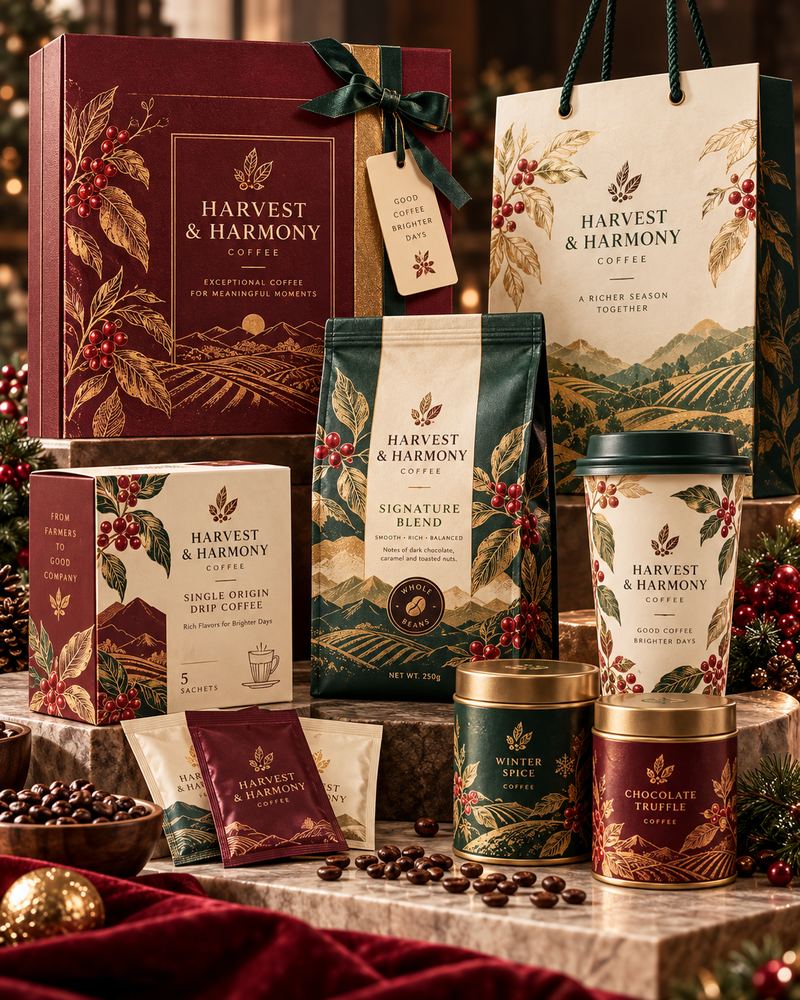
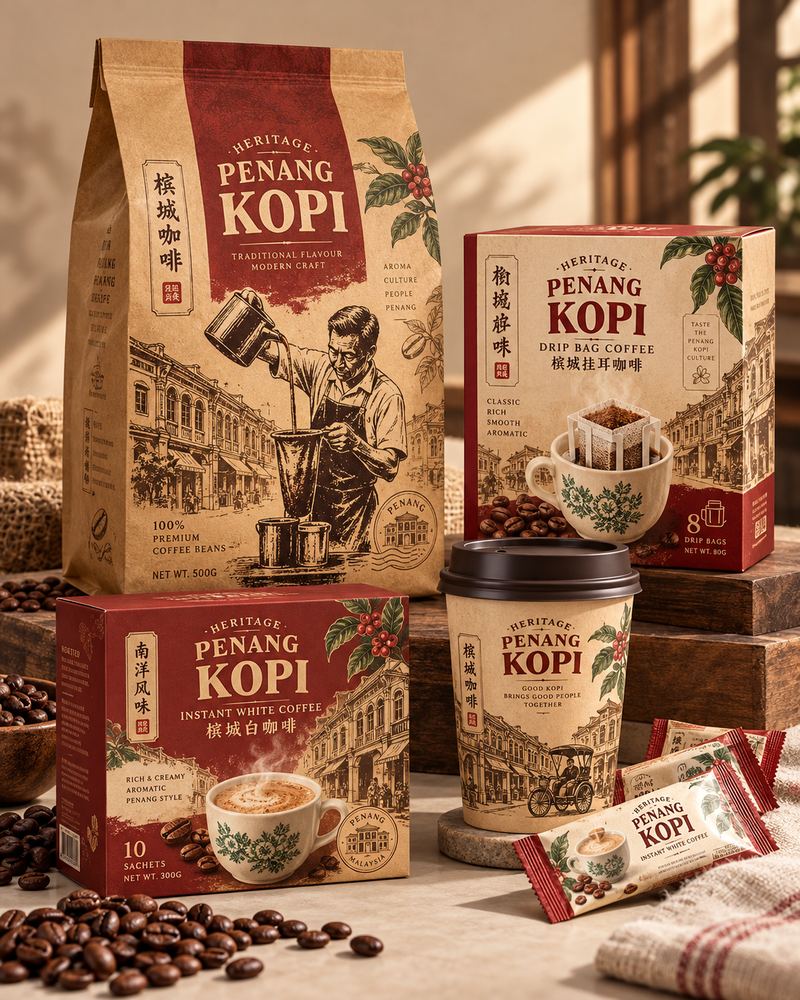
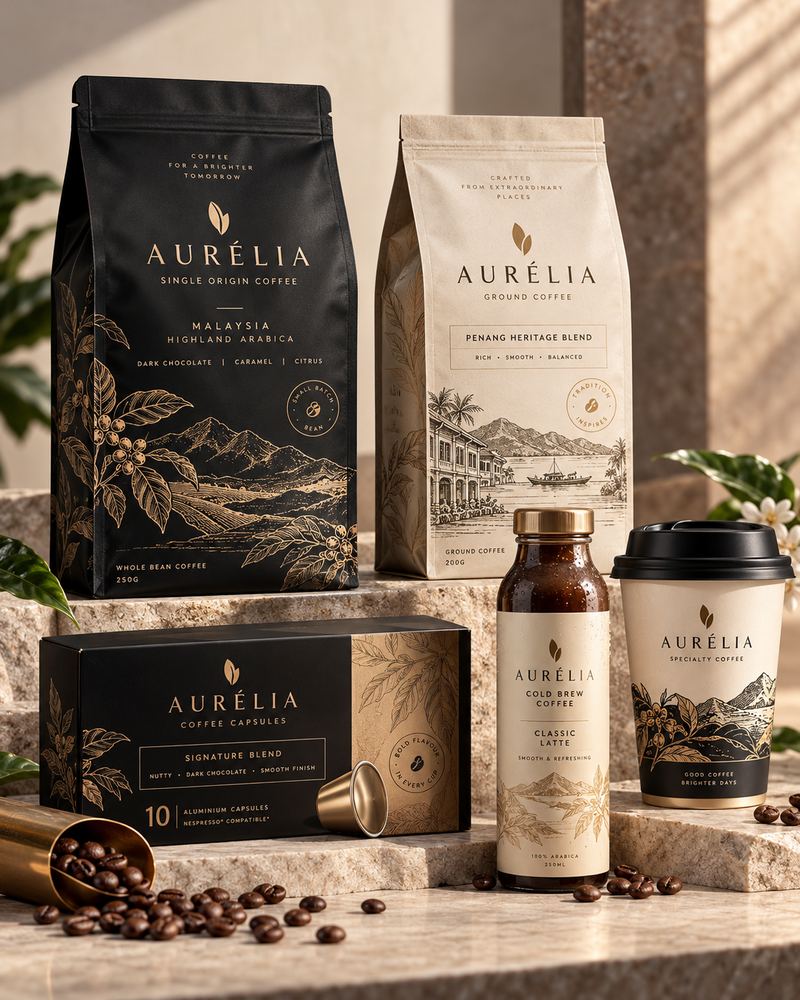
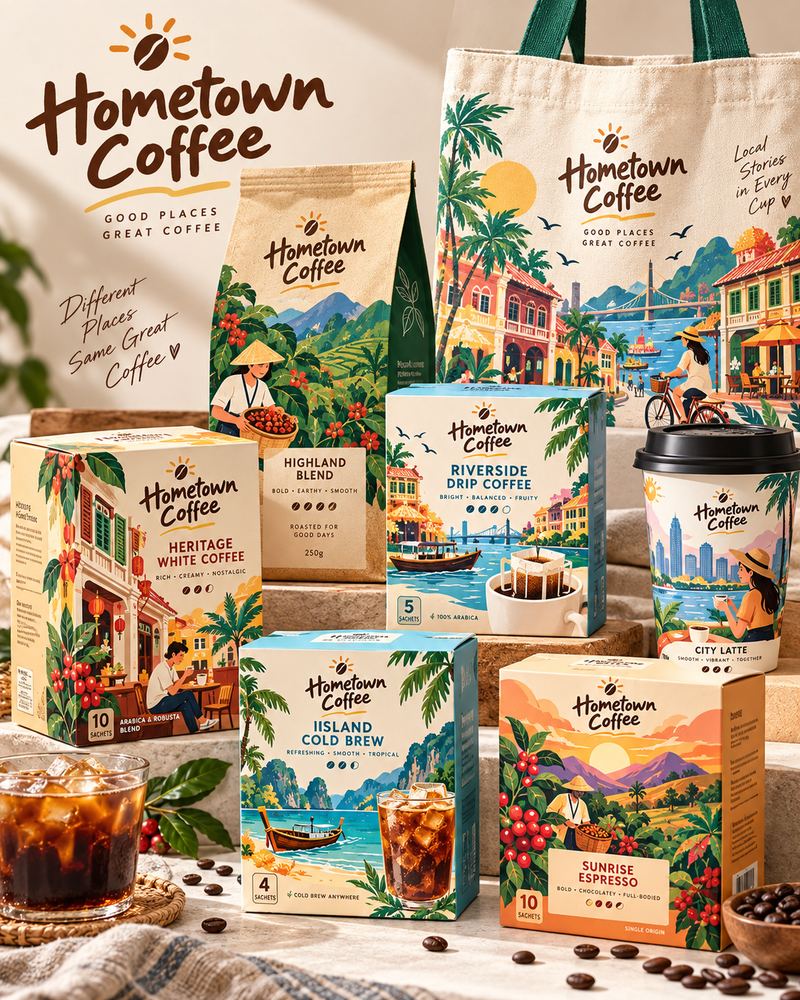
Eight concept designs by our designers, each exploring a different direction for a coffee brand. They are design studies to show style options, not client products; your packaging is designed from scratch for your own brand.
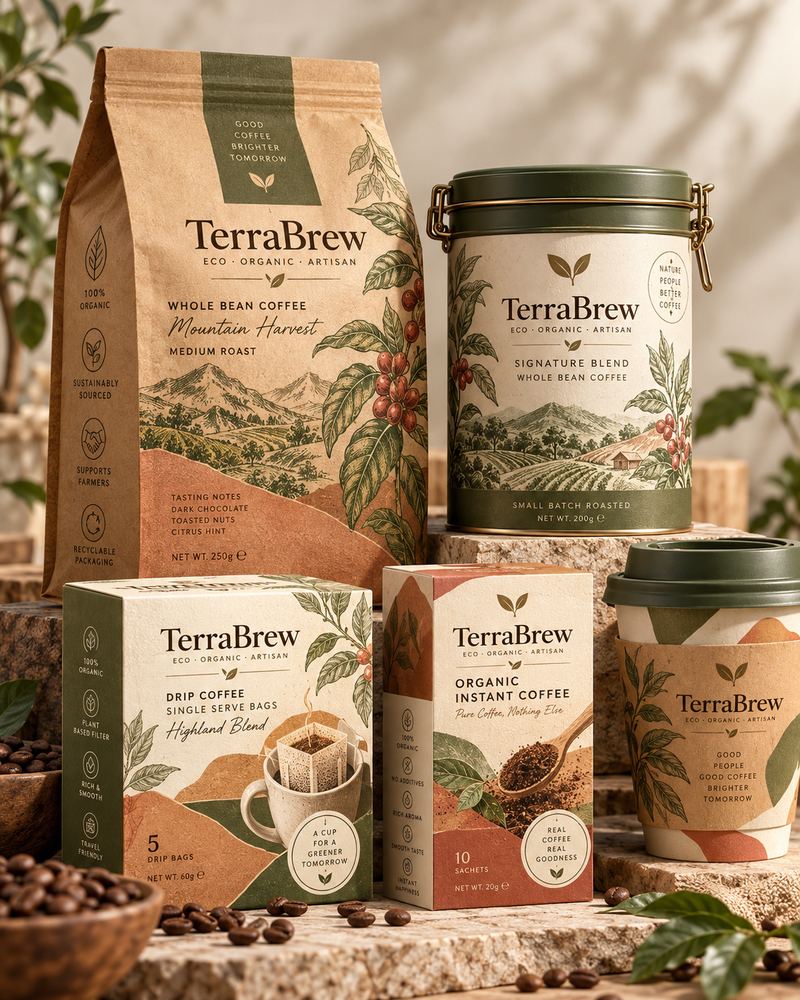
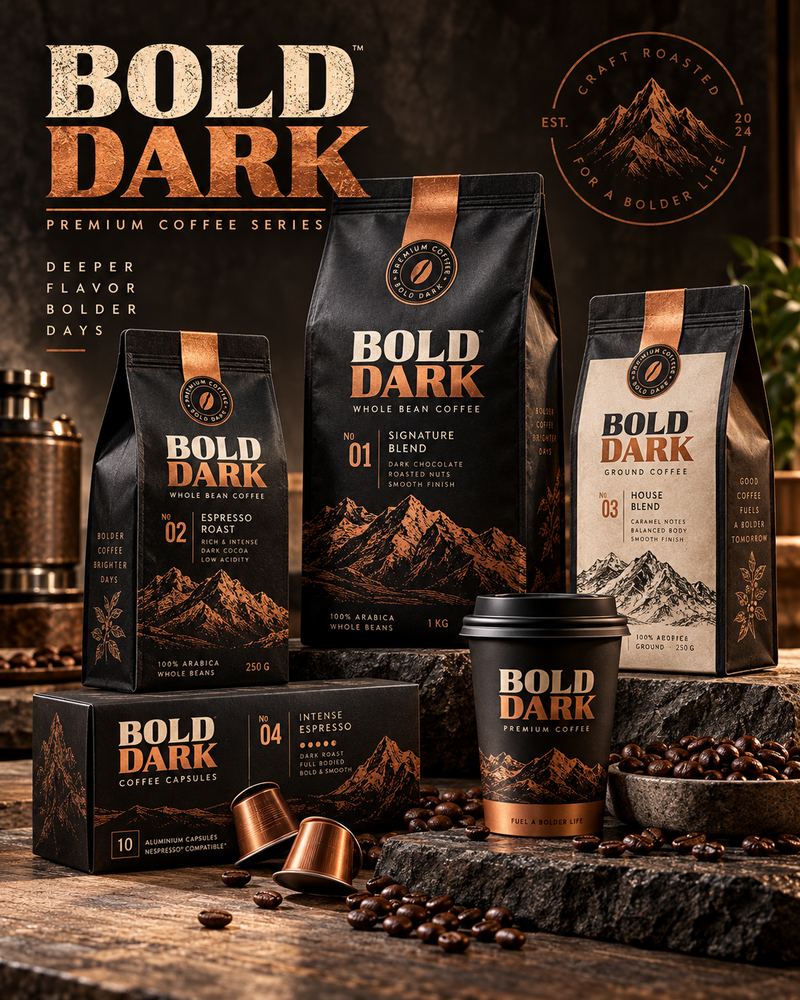
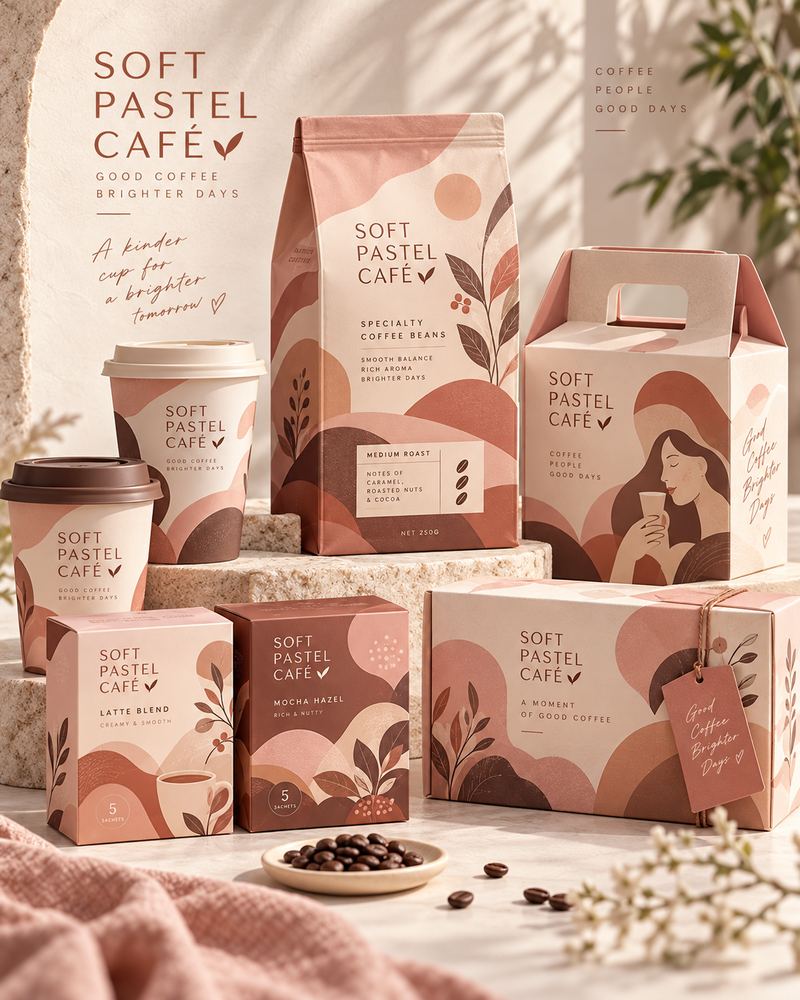
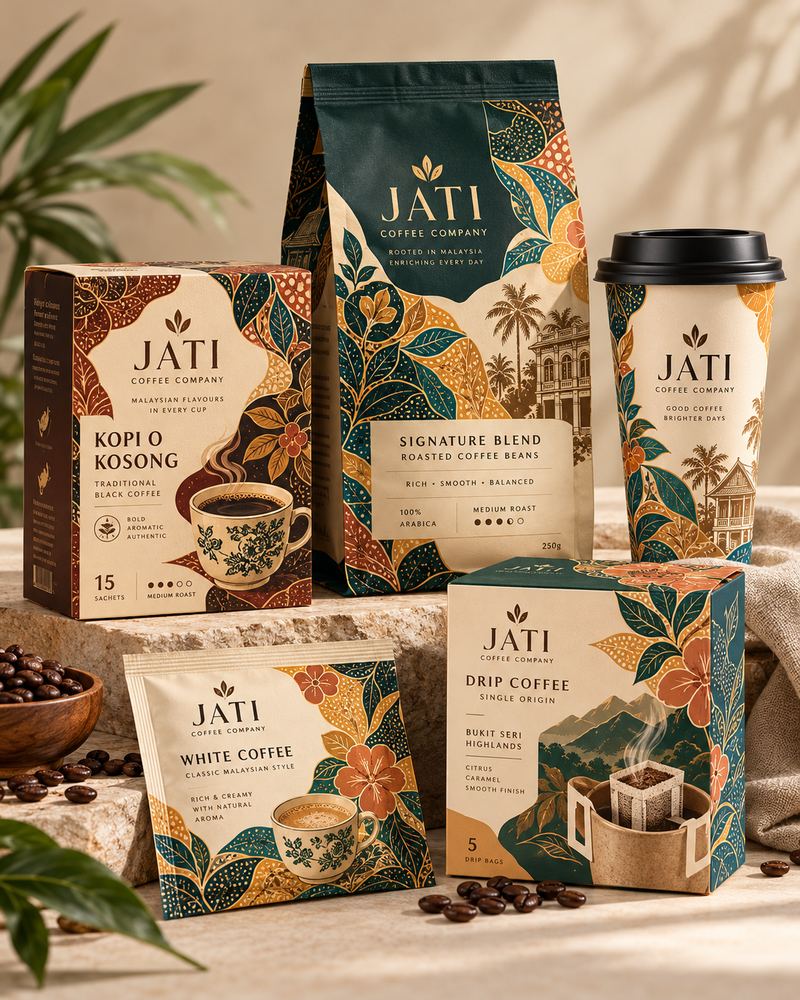
KEFI's design team creates the brand look and packaging for coffee brands we produce: logo and visual identity, designs for bags, boxes, stick packs, drip bags, cans and cups, and print-ready label artwork laid out for Malaysian requirements. Because the same team develops your coffee, the design fits the pack sizes, formats and production from the start.
Most people decide whether to try a new coffee in a few seconds, from the pack on a shelf or a small thumbnail on Shopee or TikTok Shop. Before anyone tastes it, the packaging has to say what the coffee is, who it is for and why it is worth the price.
Good coffee packaging also has to work hard in practice. It must fit the actual pack sizes, survive printing on kraft paper or foil, leave room for the information Malaysian labels require and still look right as a tiny image on a phone screen.
Eight concept designs by our designers, each exploring a different direction for a coffee brand. They are design studies to show style options, not client products; your packaging is designed from scratch for your own brand.
The right style starts from your customers and where they buy. Heritage designs such as Penang Kopi and Jati suit kopi, white coffee, tourist retail and export brands that want to feel Malaysian. Premium minimal designs like Aurélia and Bold Dark suit specialty beans, espresso and gifts, where restraint signals quality.
Illustrated and lifestyle designs like Hometown Coffee and Soft Pastel Café stand out online and appeal to younger buyers. Natural styles like TerraBrew suit wellness and sustainability positioning, and festive ranges like Harvest & Harmony are built for gifting seasons.
A coffee brand rarely has just one product. As you add a drip bag, a 3-in-1 box or a can, every pack needs to feel like the same family. We design a simple system: logo placement, colours, typography, how product names and flavours are shown, and colour coding so customers can tell blends apart at a glance.
That system is what lets the portfolio brands above stretch from a bag to a box, a sachet and a cup without looking inconsistent.
Because our design team works alongside production, artwork is prepared to the real dielines, materials and pack sizes, so there are no surprises at printing. Labels are laid out with the information pre-packed food in Malaysia must show, such as the product name, ingredients, net content, manufacturer or packer details and date marking.
Small formats like single stick packs have little space, so detailed information usually goes on the outer box. A Halal logo is only added once certification covers your product; see Halal coffee OEM.
Many new coffee brands sell mainly online, where the pack is first seen as a small square image. We check that the brand name and product type are readable at thumbnail size, and can prepare product photos, marketplace images and launch visuals with our digital marketing team.
We start with your brief: your customers, channels, price point and the products you plan to launch. The design team then presents a few style directions, you choose one to refine, and we develop the full pack range and labels. Final artwork and dielines are prepared for printing, timed with your coffee samples so packaging and product are ready together.
Design fees and timelines depend on the number of packs and how much is new, and we share them in a consultation.
Yes. Our design team creates brand identities, packaging and print-ready labels for coffee brands, mainly those that produce their coffee with KEFI.
No. The eight portfolio pieces are concept designs created by our designers to show different style directions. Your packaging is designed from scratch for your own brand.
Yes. We can build the packaging around your current logo and brand colours, or create a new brand look if you are starting fresh.
Yes. We prepare print-ready artwork and dielines that match the pack sizes and formats used in production.
Only when Halal certification covers your product and brand. We leave space for it in the layout and add the logo once certification is in place.
It depends on your customers and where you sell. Heritage styles suit kopi and tourist retail, minimal premium styles suit specialty beans, and bright illustrated styles stand out online.
Tell us about your coffee and your customers. Our design team will suggest a direction.